How Horses Perceive People and Their Surroundings
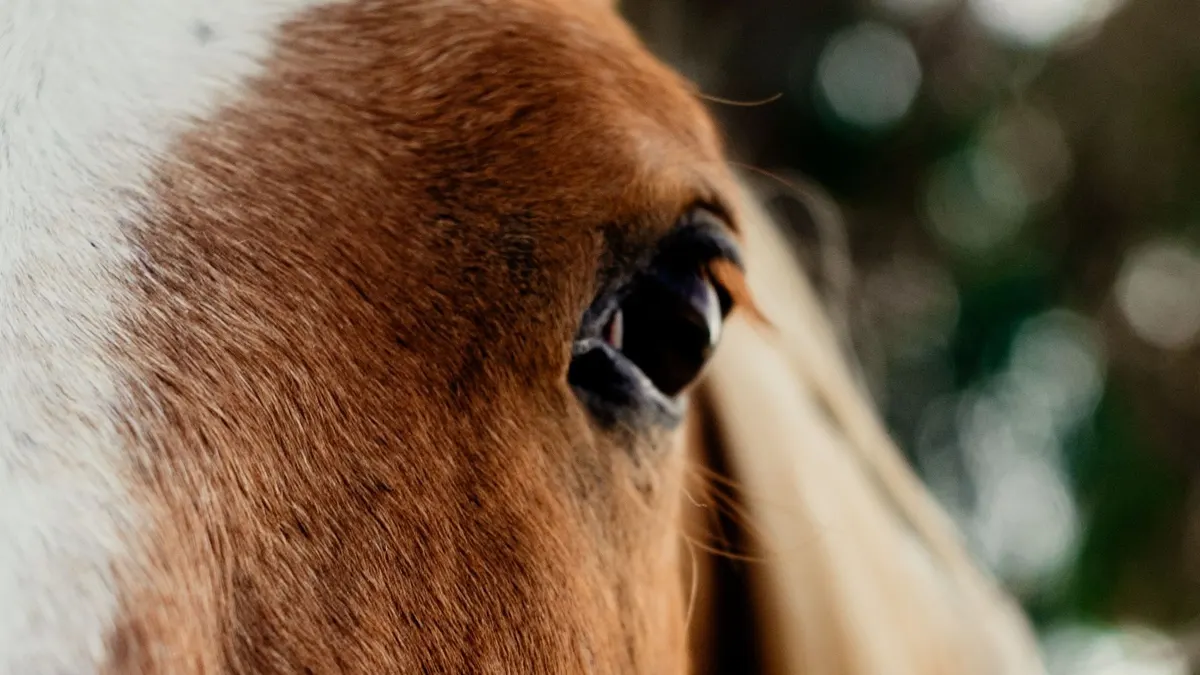
A horse does not perceive a person in the same way a person perceives a horse. Equine vision, hearing, and sensitivity to movement shape how an approach may look and sound. These differences matter around horses, whether a person is leading, grooming, feeding, or simply passing nearby. Individual responses vary, so calm behavior and awareness of the horse’s position are important parts of safe handling.
A broad field of vision
Because a horse’s eyes sit on the sides of its head, it can see much of the area around its body without turning. This broad field of vision helps the horse notice movement from different directions. However, the view is not equally clear everywhere, and a horse may need to turn its head to examine an object more directly.
There are also areas a horse cannot see clearly at a given moment. These include a narrow space directly in front of the face and an area behind the hindquarters. The exact view changes as the horse moves its head. A person who suddenly appears in a less visible area may startle the horse, even if the person has been nearby. Approaching from the side, where the horse can notice the person, is generally more predictable.
Blind spots and body position
Being behind a horse can be risky because the horse may not see someone there and could react by moving or kicking. When work near the hindquarters is necessary, a handler should follow suitable training and stable procedures rather than assuming the horse knows where the person is. A qualified equine professional can demonstrate safe positioning and handling for a particular horse and task.
Close to the head, avoid moving abruptly into the space directly in front of the horse’s nose. Let the horse become aware of a person’s presence before reaching toward its face. When moving around the body, keeping a hand in contact may help a handler remain oriented to the horse, but it does not remove the need for caution or appropriate supervision.
Hearing and attention to movement
Horses can orient their ears toward sounds, including sounds that a person may barely notice. A sudden voice, clatter, or fast footstep can draw attention or prompt a startle response. Speaking in an even tone and moving without rushing can make a person’s approach easier to follow. Quiet does not mean completely silent; the goal is to avoid surprising the horse.
Horses also notice posture, direction, and changes in a person’s movement. A direct, fast approach may feel different from a gradual approach that pauses when the horse becomes attentive. Watch the horse’s ears, head, body tension, and willingness to remain in place. These signals can offer clues about attention or unease, but no single signal explains exactly what a horse is feeling.
Putting perception into practice
Before approaching, observe where the horse is looking and whether it appears settled. Come into view from the side, move at a measured pace, and allow room for the horse to shift position. Avoid reaching suddenly, crowding the horse, or standing in a blind area. In a confined space, keep an exit path clear and follow the stable’s handling rules.
These precautions reduce avoidable surprises but cannot guarantee a particular response. A horse may react to pain, unfamiliar surroundings, or other factors that are not obvious. For concerns about a horse’s vision, hearing, behavior, or physical comfort, consult a veterinarian or another qualified equine professional.